
How long does diabetic wound dressing take to heal?
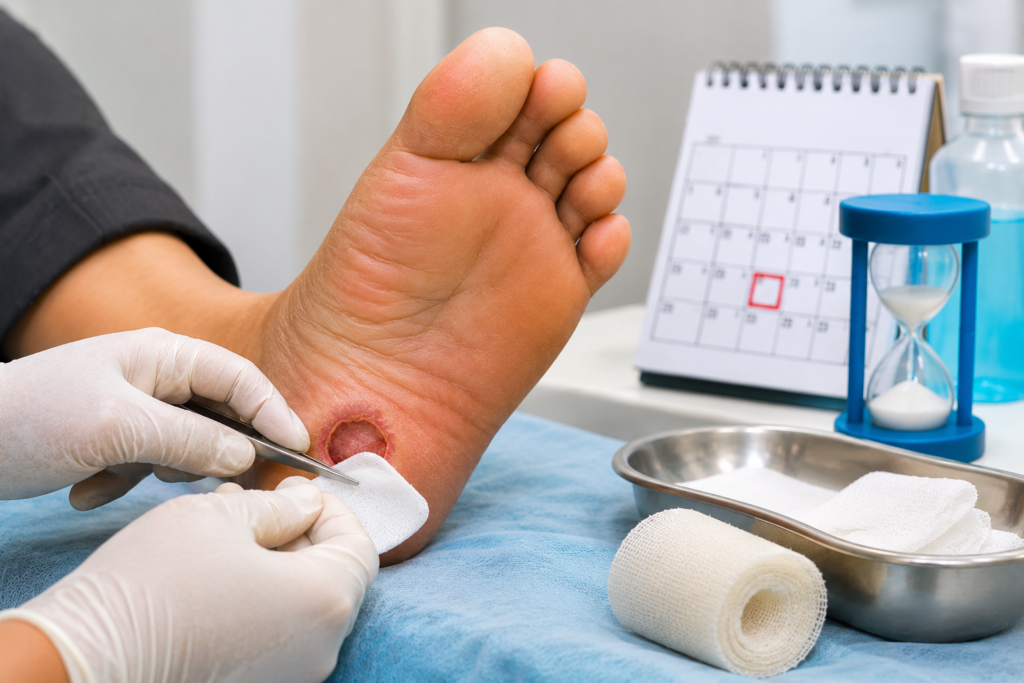
Healing time with diabetic wound dressing depends on wound depth, infection, blood flow to the foot and sugar control. Small, clean wounds with good circulation heal faster than deep or infected ones.Taking pressure off the wound and regular dressing changes are usually the biggest factors you can control.
Diabetic foot wounds require careful monitoring because diabetes can affect nerves, blood circulation and the body’s ability to fight infection. Although dressing protects the wound and supports healing, it cannot correct every underlying problem.
At Elegance Diabetic Foot Clinic, Dr. Ashutosh Shah evaluates diabetic foot wounds and advises patients on appropriate wound management, pressure reduction and follow-up care.
Key Takeaways
- Diabetic wound dressing healing time varies according to wound depth, circulation, infection and pressure.
- Dressing changes support healing but do not guarantee that an ulcer will close.
- Blood sugar management, appropriate footwear and pressure reduction are important.
- Wound size and appearance should be checked regularly.
- A worsening wound requires prompt specialist assessment.
What Decides How Fast a Foot Wound Heals?
Several factors determine how quickly a diabetic foot ulcer improves.
1. Wound size and depth
A superficial wound generally has a better chance of healing quickly than an ulcer involving deeper tissues.
However, even a small wound may become serious if circulation is poor or infection develops.
2. Blood circulation
Healing tissue requires oxygen and nutrients delivered through the bloodstream.
When blood supply is reduced, wounds may heal slowly despite regular dressing changes. Therefore, a specialist may recommend circulation tests when clinically indicated.
3. Infection
Infection increases inflammation and can damage surrounding tissue.
Signs include spreading redness, swelling, pus, warmth and an unpleasant smell. However, some people with diabetes may have serious infection without significant pain.
4. Pressure on the wound
Repeated pressure from standing, walking or unsuitable footwear can delay healing.
Consequently, reducing pressure is often as important as choosing the dressing itself.
5. Overall health
Blood sugar control, nutrition, smoking, kidney disease and other medical conditions may influence recovery.
For a related explanation, read how long diabetic wound dressing takes to heal in Surat.
What Does Each Healing Stage Look Like?
Diabetic foot wounds generally progress through inflammation, tissue formation and remodelling. However, these stages overlap, and a chronic wound may remain stalled.
Stage 1: Initial wound assessment
The specialist examines wound depth, discharge, surrounding skin and possible infection.
Treatment may involve cleaning, an appropriate dressing and pressure reduction.
Stage 2: Inflammation and wound preparation
During this stage, the body responds to tissue injury.
Some inflammation is normal. Nevertheless, increasing redness, swelling, discharge or tissue damage requires reassessment.
Stage 3: New tissue formation
Healthy granulation tissue may develop as the wound begins filling.
The specialist monitors wound size and tissue condition to determine whether treatment is working.
Stage 4: Skin closure
New skin gradually covers the wound when healing conditions are favourable.
Even after closure, the affected area remains vulnerable to repeated pressure and injury.
Stage 5: Long-term protection
After healing, appropriate footwear, daily foot checks and ongoing diabetes management help reduce recurrence.
Diabetic Foot Wound Healing Timeline
| Healing stage | What you may see | What to do | Warning sign |
|---|---|---|---|
| Initial assessment | Open wound, damaged skin or discharge | Obtain examination and dressing advice | Black tissue or spreading redness |
| Early wound care | Changes in moisture and inflammation | Follow cleaning and dressing instructions | Increasing swelling or pus |
| Tissue formation | Healthier tissue and possible wound-size reduction | Continue offloading and scheduled reviews | Increasing depth or wound size |
| Skin closure | Gradual reduction in the open area | Protect fragile new tissue | Wound reopening |
| After healing | Closed skin requiring protection | Check feet daily and use suitable footwear | New blister, crack or ulcer |
Typical healing duration: [Dr. Ashutosh Shah to confirm expected week ranges for uncomplicated, deep and infected wounds.]
This table describes healing stages, not a guaranteed timetable. Some wounds require substantially longer treatment or additional procedures.
How Much Does Sugar Control Matter?
Blood sugar management plays an important role in diabetic wound healing.
Persistently elevated glucose can interfere with immune function and contribute to infection risk. Over time, diabetes may also damage nerves and blood vessels.
Therefore, wound management should include appropriate diabetes care.
Patients should:
- Monitor glucose as advised.
- Take prescribed medicines consistently.
- Follow an individualised meal plan.
- Attend recommended diabetes reviews.
- Inform the treating clinician about unusual glucose readings.
However, good sugar control alone cannot heal a wound with untreated infection, inadequate circulation or persistent pressure.
For information about treatment expenses, see blogs diabetic foot dressing cost in surat.
Why Does Pressure on the Wound Slow Healing?
Every step places pressure on different parts of the foot.
When an ulcer develops on a weight-bearing area, repeated walking can damage healing tissue and prevent the wound from closing.
This problem becomes more serious when diabetic neuropathy reduces protective sensation.
A patient may continue walking without feeling the injury worsen.
How can pressure be reduced?
Depending on the wound and circulation, a specialist may recommend:
- Medical offloading footwear
- A removable walking device
- A non-removable knee-high offloading device when appropriate
- Activity modification
- Reduced weight-bearing on the affected area
The International Working Group on the Diabetic Foot (IWGDF) recommends evidence-based offloading approaches for neuropathic plantar foot ulcers.
Patients should not independently apply casts or pressure-relieving devices.
Diabetic Wound Dressing in Bardoli: When Should You Seek Specialist Care?
Patients with diabetes should arrange prompt assessment for an open foot wound, particularly if it is not improving.
Seek urgent medical attention when you notice:
- Spreading redness or increasing swelling
- Pus or foul-smelling discharge
- Blackened or discoloured tissue
- Fever or rapidly worsening symptoms
- A wound that becomes deeper
- New foot colour changes or signs of poor circulation
Do not wait for pain. Diabetic nerve damage can reduce the ability to recognise serious injury.
Early examination helps identify whether dressing alone is sufficient or additional treatment is required.
When Is a Wound Not Healing as Expected?
A wound may be considered slow-healing when it shows insufficient improvement despite appropriate treatment.
Clinicians assess wound size, depth, tissue condition and infection rather than relying only on the number of days since the first dressing.
A diabetic foot ulcer that has not substantially reduced in area after approximately four weeks of appropriate care should prompt reassessment of the treatment plan.
The specialist may investigate:
- Reduced blood circulation
- Persistent infection
- Inadequate pressure relief
- Dead tissue
- Possible bone involvement
- Other medical factors affecting healing
Some complex wounds require advanced procedures.
For example, skin graft for diabetic wound in Ankleshwar may be considered in selected patients after appropriate wound preparation.
Not every diabetic foot ulcer requires a skin graft.
Diabetic Foot Wound Care With Dr. Ashutosh Shah
At Elegance Diabetic Foot Clinic, Dr. Ashutosh Shah provides assessment and treatment planning for diabetic foot wounds.
Management may involve wound examination, dressing selection, infection assessment, circulation evaluation and pressure reduction.
Regular reviews help determine whether the wound is progressing or requires a change in treatment.
Patients can use the clinic’s contact us page to enquire about appointments and follow-up arrangements.
Frequently Asked Questions
Medicines alone may not address every cause of delayed healing. Poor circulation, infection, repeated pressure, dead tissue or uncontrolled diabetes can interfere with recovery. A specialist should reassess a wound that remains open despite treatment and determine whether additional investigations, offloading or procedures are necessary.
Walking depends on the wound’s location, severity and the prescribed offloading method. Weight-bearing ulcers can worsen with repeated pressure. Patients receiving diabetic wound dressing in bardoli should follow individual instructions about footwear, walking restrictions and activity rather than assuming normal walking is safe.
Dressing frequency depends on wound discharge, dressing material, infection and surrounding skin condition. Some dressings require frequent replacement, while others remain in place longer. Follow the treating clinician’s instructions and seek advice if the dressing becomes soaked, displaced or contaminated before the scheduled change.
Yes. Smoking can impair circulation and reduce oxygen delivery to healing tissue. It also increases vascular disease risk, which is particularly concerning for people with diabetic foot ulcers. Stopping smoking supports overall vascular health and may improve the conditions needed for wound healing alongside appropriate medical treatment.
Return according to the specialist’s scheduled review plan. However, seek earlier assessment if redness spreads, swelling increases, discharge changes, the wound deepens or new tissue discolouration develops. Fever, rapidly worsening infection or blackened tissue may require emergency care rather than waiting for a routine appointment.
Conclusion
Diabetic wound dressing healing time depends on more than the dressing itself. Wound depth, infection, circulation, blood sugar management and pressure reduction all influence recovery.
Regular assessment helps identify whether a wound is healing or requires additional treatment.
At Elegance Diabetic Foot Clinic, Dr. Ashutosh Shah can evaluate diabetic foot wounds and recommend an individual management plan.