
How Can Leg Angioplasty for Diabetes Improve Blood Flow in the Legs?
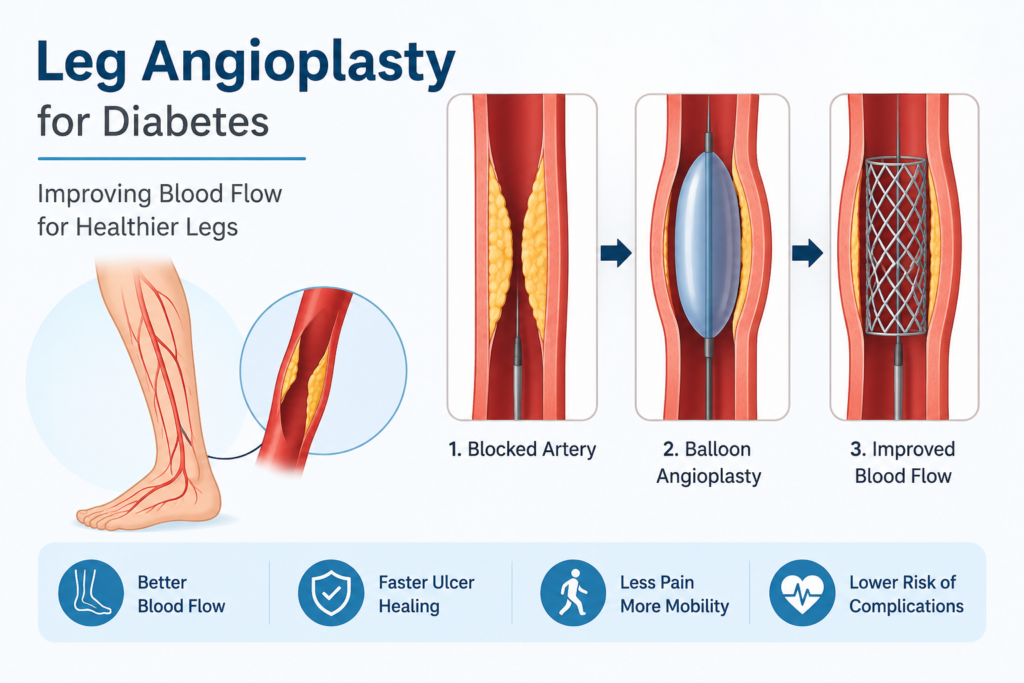
Leg angioplasty for diabetes can help improve blood flow when diabetes has contributed to narrowed or blocked arteries in the legs. People with diabetes have a higher risk of peripheral artery disease, which can reduce the amount of oxygen-rich blood reaching the feet and lower legs. Poor circulation can also make wounds and diabetic foot ulcers harder to heal.
What Is Leg Angioplasty for Diabetes?
Leg angioplasty is a minimally invasive procedure that opens narrowed or blocked arteries in the legs. During the procedure, the doctor guides a thin catheter through the blood vessel to the affected artery. The doctor then inflates a small balloon to widen the narrowed area and improve blood flow.
In some cases, the doctor may place a small mesh tube called a stent to keep the artery open. The doctor may also use atherectomy to remove plaque from the artery. The location and severity of the blockage help the doctor choose the most suitable treatment.
How Does It Improve Blood Flow?
When an artery becomes narrowed because of plaque buildup, blood has difficulty reaching the lower leg and foot. Angioplasty helps create a wider pathway through the affected artery.
As blood flow improves, more oxygen and nutrients can reach the tissues. This can be particularly important for people with diabetes who have poor circulation and foot wounds.
Better circulation may help:
- Improve blood supply to the feet and legs
- Support healing of non-healing diabetic foot ulcers
- Reduce symptoms such as leg pain and cramping
- Improve tissue oxygenation
- Reduce the risk of serious complications associated with poor circulation
However, angioplasty is not appropriate for every patient. A vascular specialist needs to evaluate the arteries and determine the most suitable treatment.
What Signs May Indicate Poor Blood Flow?
People with diabetes should not ignore changes in their feet or legs. Possible signs of reduced circulation include:
- Leg pain or cramping while walking
- Numbness or weakness in the legs
- Cold feet or lower legs
- Sores that do not heal
- Changes in skin color
- Reduced hair growth on the feet or legs
These symptoms can indicate peripheral artery disease and require medical evaluation.
Can Angioplasty Help With Diabetic Foot Ulcers?
Yes, improving blood flow can be an important part of managing certain diabetic foot ulcers, particularly when poor arterial circulation is contributing to delayed healing.
A diabetic foot ulcer needs more than wound dressing alone when significant arterial blockage is present. Restoring circulation may help provide the blood supply required for tissue repair. The treatment plan should be based on a complete vascular assessment.
What Types of Leg Angioplasty Are Available?
Depending on the patient’s vascular condition, treatment may include:
Balloon angioplasty: A small balloon is inflated inside the narrowed artery to widen the passage.
Stent placement: A small mesh tube may be placed inside the artery to help maintain blood flow.
Atherectomy: A specialized device may be used to remove or modify plaque within the artery.
The best option varies from patient to patient.
Why Choose Specialist Diabetic Foot Care?
Diabetes can affect circulation, nerves, skin, and wound healing. Therefore, patients with suspected circulation problems may benefit from coordinated diabetic foot and vascular care.
At Elegance Diabetic Foot And Ulcers Clinic in Surat, peripheral angioplasty is offered as part of vascular care for diabetic foot complications. The clinic is headed by Dr. Ashutosh Shah and provides diabetic foot services for patients with circulation problems, ulcers, and other diabetic foot conditions.
If you have diabetes and notice persistent foot wounds, cold feet, leg pain while walking, skin discoloration, or other circulation changes, consult a qualified specialist promptly. Early assessment can help identify reduced blood flow and determine whether leg angioplasty for diabetes or another treatment is appropriate.
FAQs
Leg angioplasty for diabetes is a minimally invasive procedure that helps open narrowed or blocked arteries in the legs. It improves blood flow to the lower legs and feet.
Yes. When poor circulation contributes to a diabetic foot ulcer, improving blood flow can support the healing process. However, doctors usually combine vascular treatment with proper wound care, infection management, pressure relief, and blood sugar control.
The doctor guides a thin catheter to the narrowed artery and uses a small balloon to widen the affected area. This creates a better pathway for blood to reach the legs and feet.
Improving blood flow can support tissue healing and may reduce complications linked to poor circulation. However, patients also need regular diabetic foot checks, proper wound care, blood sugar management, and appropriate footwear.
A vascular specialist can evaluate your circulation and determine whether angioplasty or another treatment would provide the best option. Tests such as vascular imaging can help identify narrowed or blocked arteries.