How Does Wound Debridement Help Healing?
Diabetic Wound Care Guidance
Dr. Ashutosh Shah
M.Ch., DNB (Plastic Surgery)
Plastic & Reconstructive Surgeon
22+ Years of Surgical Experience
Elegance Diabetic Foot Care (EDFC)
Updated: August 2026
A diabetic foot wound may remain open for weeks even when regular dressings are being done. Sometimes, one of the reasons is that dead, damaged or infected tissue remains inside the wound.
This is where wound debridement can help.
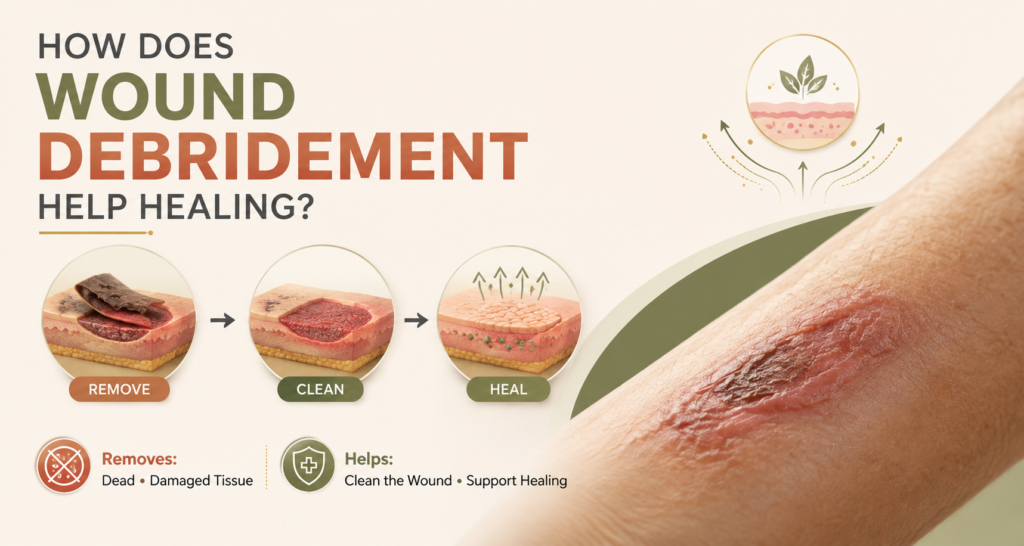
Wound debridement is the controlled removal of dead, infected or nonviable tissue from a wound. It helps expose the actual wound bed so that further treatment can be planned more effectively.
At Elegance Diabetic Foot Care (EDFC), wound treatment is approached by looking not only at the wound itself but also at infection, circulation, pressure, sensation and the underlying reason the wound developed.
Key Takeaways
- Debridement removes dead or unhealthy tissue.
- It can expose healthier tissue underneath.
- It helps doctors assess the true depth of a wound.
- Not every diabetic foot wound requires debridement.
- Some wounds need repeated debridement.
- Infection and blood circulation must also be evaluated.
- Pressure relief remains important after treatment.
- Patients should never cut dead tissue from a diabetic wound themselves.
What Is Wound Debridement?
Debridement means removing tissue that is dead, infected, damaged or no longer capable of healthy recovery.
This tissue may appear black, brown, yellow or grey depending on the wound.
When unhealthy tissue covers the wound bed, it may make proper assessment and wound management more difficult.
EDFC provides wound debridement treatment as part of its diabetic foot wound-management services.
Why Can Dead Tissue Interfere With Healing?
Healthy wound healing depends on viable tissue, appropriate circulation, pressure control and infection management.
Dead tissue cannot recover.
It may:
- cover healthy tissue,
- hide deeper damage,
- harbour bacteria,
- make wound assessment difficult,
- and interfere with further treatment.
Removing selected nonviable tissue can therefore help create a cleaner wound bed.
However, debridement does not automatically make every wound heal. The underlying causes still need treatment.
When Might Debridement Be Needed?
| Wound Finding | Why It Matters |
|---|---|
| Black or necrotic tissue | May represent dead tissue |
| Yellow or grey slough | Can cover the wound bed |
| Infected tissue | May need removal as part of infection control |
| Foul odour or discharge | Requires assessment for infection |
| Deep ulcer | True wound depth may be hidden |
| Slow-healing ulcer | Pressure, infection or unhealthy tissue may be involved |
| Abscess | Drainage and further treatment may be required |
The decision is based on clinical examination rather than colour or appearance alone.
Does Every Diabetic Foot Ulcer Need Debridement?
No.
Some wounds contain tissue that should be removed, while others may need different treatment.
Depending on the problem, treatment may include:
- specialised wound dressing,
- pressure offloading,
- infection treatment,
- circulation assessment,
- glucose management,
- footwear modification,
- or corrective surgery.
EDFC also provides non-surgical diabetic foot management for patients who may require wound dressings, chemical debridement, pressure assessment and other supportive treatments.
What Types of Debridement Are Available?
The method depends on the condition of the wound.
Surgical or Sharp Debridement
Selected unhealthy tissue is removed using appropriate surgical instruments.
This may be useful when rapid removal of dead or infected tissue is required.
Chemical Debridement
Enzymatic agents may be used to help break down nonviable tissue in selected wounds.
Autolytic Debridement
Special wound dressings can support the body’s natural ability to separate and remove unhealthy tissue.
The most appropriate method depends on wound depth, tissue condition, circulation and infection.
Why Can the Wound Look Bigger After Debridement?
This can be alarming for patients.
Dead tissue may hide the actual size of the wound.
After it is removed, a deeper or wider wound bed may become visible.
This does not necessarily mean debridement damaged the foot. It may simply reveal tissue loss that was already present beneath the unhealthy tissue.
Can Debridement Control Infection?
It can be an important part of infection treatment when dead or infected tissue is present.
However, debridement alone may not be enough.
Depending on the severity of infection, treatment may also involve antibiotics, drainage, wound cultures, imaging or further surgery.
Severe diabetic foot infection should be treated promptly.
Why Is Blood Circulation Important?
A wound requires adequate blood supply for healing.
If circulation to the foot is severely reduced, simply removing dead tissue may not solve the problem.
Vascular assessment may therefore be necessary when poor circulation is suspected.
This is one reason diabetic foot treatment should consider the entire foot rather than focusing only on the visible wound.
What Happens After Debridement?
Treatment usually continues after the unhealthy tissue has been removed.
The next steps may include:
- wound dressing,
- infection control,
- pressure offloading,
- circulation assessment,
- glucose management,
- nutritional support where needed,
- footwear modification,
- and regular wound monitoring.
More complex wounds may require reconstructive treatment after the wound has been adequately prepared.
Can Debridement Prevent Amputation?
Debridement can be an important part of limb-preservation treatment, particularly when unhealthy or infected tissue needs to be removed.
However, no procedure can guarantee that amputation will always be prevented.
The outcome depends on infection severity, circulation, wound depth, tissue viability and the patient’s overall medical condition.
When Should You Seek Urgent Medical Care?
A diabetic foot wound needs prompt assessment if you notice:
- rapidly increasing redness,
- swelling,
- pus,
- foul odour,
- black tissue,
- fever,
- exposed bone or tendon,
- rapidly worsening wound depth,
- or sudden changes in foot colour.
Diabetic neuropathy can reduce pain sensation. A serious wound may therefore not always hurt.
Treat More Than the Visible Wound
Dr. Ashutosh Shah has more than 22 years of surgical experience and works in diabetic foot surgery, chronic wound management and reconstructive procedures.
The treatment philosophy described about Elegance Diabetic Foot Care includes both surgical and non-surgical diabetic foot care, with attention to wound healing, pressure and foot function.
Debridement can help create a healthier wound environment, but successful diabetic wound management also means asking why the wound developed and what is preventing it from healing.
If a diabetic wound contains dead tissue, discharge or odour, or is becoming deeper instead of healing, contact Elegance Diabetic Foot Care for an appropriate assessment rather than trying to remove the tissue yourself.
FAQs
It removes dead or unhealthy tissue from a wound.
No. Treatment depends on the wound and circulation.
Yes, some wounds require more than one session.
It may appear larger when hidden dead tissue is removed.
No. Diabetic foot wounds should be professionally assessed.