
Are Dry Fruits or Nuts Dangerous for Diabetic Foot Patients?
Almost every week, a patient walks into our clinic with the same worry. They sit down, open a small box of almonds or walnuts, and quietly ask, "Doctor, can I still eat these? My sugar is high, and my feet hurt." This question is far more important than people realise, especially in a city like Surat where dry fruits are part of daily life, festivals, and family gifting. As someone who handles the best diabetic foot treatment in Surat at Elegance Clinic, I want to give you a clear, honest, and very practical answer. No fear, no confusion, just real talk from Dr. Ashutosh Shah and the team at Elegance Clinic.
So let us settle this slowly, like a conversation in the consulting room, because your feet deserve that much attention.
Why this question matters for diabetic foot patients in Surat
Surat loves its food. Weddings come with sweets, late evenings come with chai, and almost every household keeps a steel dabba full of cashews, almonds, walnuts, pistachios, dates, and figs. For most people, this is harmless. However, for someone living with diabetes, especially with foot related problems, even small daily choices can quietly change how your feet heal, swell, or hurt.
Patients often think only sugar, sweets, and rice raise their sugar levels. Yet many of them are surprised when I explain that quantity, timing, and the type of dry fruit also play a strong role. Moreover, when blood sugar stays high for long periods, the small nerves and tiny blood vessels in the feet slowly get damaged. That is when ulcers, numbness, and slow healing wounds start to appear.
What dry fruits actually do inside a diabetic body
Let us be very honest here. Dry fruits and nuts are not the villain. In fact, many of them are genuinely good for people with diabetes when eaten the right way. However, there is a thin line between healthy snacking and accidental sugar overload. Therefore, understanding this line is the first step toward protecting your feet.
The sugar story behind every handful
Dry fruits like raisins, dates, figs, dried mango, and dried apricots are concentrated sources of natural sugar. When you eat a few fresh grapes, you get fibre and water along with the sugar. However, once those grapes are dried into raisins, the sugar concentrates and the water disappears. Consequently, even a small handful can spike blood sugar quickly.
On the other hand, nuts such as almonds, walnuts, pistachios, and peanuts have very little sugar. They mainly carry healthy fats, fibre, and protein. As a result, they generally support better sugar control when eaten in small portions.
The fat side that nobody talks about
Many patients only count sugar. Still, fats matter a lot for diabetic foot patients. Nuts have heart friendly fats, which help your blood vessels stay flexible. Since diabetes already damages tiny vessels in the legs and feet, healthy fats can offer real support. Nevertheless, eating two katoris of nuts every evening, even healthy ones, can push weight up, raise insulin resistance, and indirectly hurt your foot healing.
Signs your diabetic foot may already be in trouble
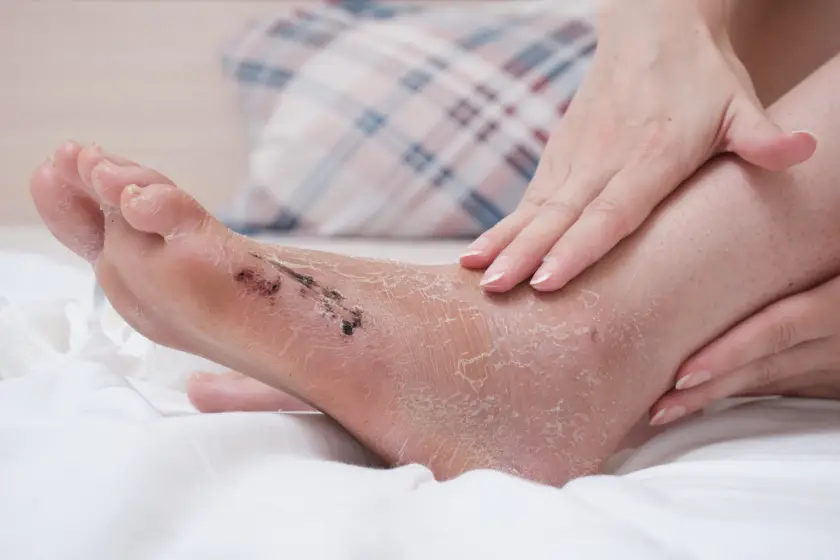
Before we talk about treatment options, please look at your feet honestly. Many patients in Surat ignore early signs because the foot does not pain in the beginning. Diabetes is sneaky like that. By the time pain becomes loud, the damage is usually deep.
Early symptoms you should never ignore
- Tingling, burning, or pins and needles in the toes, especially at night
- Numbness or a strange "cotton like" feeling under the foot
- Dry, cracked heels that take weeks to heal
- Small cuts, blisters, or shoe bites that refuse to close
- Colour changes, redness, blackish patches, or shiny skin
- Swelling in one foot more than the other
- Bad smell from a wound, even a tiny one
Common causes behind diabetic foot wounds
Most diabetic foot problems come from a mix of high sugar, poor circulation, nerve damage, and ill fitting footwear. Additionally, daily habits like walking barefoot at home, ignoring minor injuries, soaking feet in very hot water, or trimming nails too short add to the risk. In Surat's humid weather, fungal infections between the toes are also a silent trigger.
Treatment options available at Elegance Clinic
At Elegance Clinic, we believe diabetic foot care is not one single treatment. It is a complete plan, built around your sugar levels, your daily routine, and the actual condition of your feet. Therefore, no two patients receive the exact same protocol.
What our diabetic foot care usually includes
- Full foot examination, pulse check, and nerve sensitivity testing
- Wound cleaning, debridement, and advanced dressings for ulcers
- Infection control with targeted antibiotics when needed
- Offloading techniques, special footwear, and custom insoles
- Vascular evaluation if circulation looks weak
- Surgical correction for deep ulcers, abscesses, or pressure points
- Nutrition guidance, sugar control planning, and lifestyle coaching
Best diabetic foot treatment in Surat, explained in simple words
The best diabetic foot treatment in Surat is not about the most expensive machine in the room. Instead, it is about catching the problem early, controlling the infection, protecting the wound from pressure, and improving blood flow so the body can do its natural healing work. At Elegance Clinic, Dr. Ashutosh Shah personally evaluates every diabetic foot patient because, in this condition, small details change the entire outcome.
What most patients ask first
Almost every new patient walks in with the same set of questions. Hence, let me answer the most common ones the way I do inside my consulting room.
- "Will I lose my foot, doctor?" Usually no, if you start treatment early and follow the plan.
- "Can I still eat almonds and walnuts?" Yes, in measured portions, mostly raw and unsalted.
- "Will the wound close again?" Most wounds heal well once sugar is controlled and pressure is removed.
- "Do I need surgery?" Only some patients do, and we always try conservative care first.
- "How long will treatment take?" Some heal in weeks, others need months, depending on depth and sugar levels.
Common mistakes patients make
Honestly, most diabetic foot complications I see in Surat are not caused by lack of medicines. They are caused by small daily mistakes that quietly grow into big problems.
- Walking barefoot at home or in temple premises
- Using sharp blades or razors to remove corns and calluses
- Applying random ointments suggested by neighbours
- Wearing tight shoes for long hours, especially in summer
- Eating large bowls of dry fruits at night, thinking "they are healthy"
- Skipping sugar checks because they "feel fine"
- Coming to the clinic only after the wound starts smelling
Furthermore, many patients stop their diabetes medicines once they feel better. This single mistake is responsible for many foot ulcers that I treat every month.
What actually works for long term results
If you want long lasting results, your daily habits matter more than any single treatment session. Truly, this is where most patients underestimate themselves.
- Check your feet every night, top, sides, and between toes
- Wash with mild soap, dry gently, especially between fingers
- Moisturise the heels, but not between the toes
- Wear soft, well fitted footwear, even inside the house
- Eat nuts in a small katori, not as a bowl of timepass
- Limit dried fruits like dates, raisins, and figs to two or three pieces
- Walk daily, but choose flat, safe surfaces
- Keep your HbA1c close to your doctor's target
For more global guidance, you can also read this helpful resource from the World Health Organization.
Cost of diabetic foot treatment in Surat
This is one of the most asked questions, so let me speak openly. Cost depends on the stage of the foot problem, the type of wound, infection level, and whether surgery is needed. A simple consultation, dressing, and basic foot care plan is very affordable for most families in Surat. Moreover, advanced ulcer care, vascular checks, debridement, and customised footwear add to the overall investment.
At Elegance Clinic, our team explains every charge in advance so there are no surprises. We also help families plan treatment in steps, since diabetic foot care is often a journey, not a one time visit. If you compare it with the cost of losing a toe or part of a foot, early treatment is always the cheaper, smarter choice.
Realistic results you can expect
Now let us talk about results, because false promises do more harm than good. With proper care, most patients see real change within the first few weeks. The wound starts looking cleaner, the pain reduces, and sugar levels become more stable. However, deep ulcers or long standing infections may take months to fully heal. Some patients also need lifelong foot monitoring, which is normal and very manageable.
Importantly, results stay only when sugar control, footwear discipline, and food habits stay consistent. Otherwise, ulcers can come back in the same place or on the other foot.
Who is a good candidate for diabetic foot treatment
Almost every diabetic with foot symptoms is a candidate for proper evaluation. Still, some patients especially benefit from focused treatment at Elegance Clinic.
- Patients with non healing wounds for more than two weeks
- Those with numbness, burning, or tingling in the feet
- Diabetics with cracked heels, fungal infections, or repeated blisters
- People who have had a previous ulcer or amputation
- Older adults who cannot easily check their own feet
- Anyone with poor sugar control and frequent foot problems
Common myths about dry fruits and diabetic feet
Surat is full of well meaning advice from family, neighbours, and WhatsApp groups. Sadly, much of it is wrong. Let me clear a few common myths I hear in my clinic almost daily.
Myth one, "Dry fruits are always safe because they are natural"
Natural does not mean unlimited. Dates, raisins, and figs can spike sugar quickly, which slows down foot healing.
Myth two, "Soaked almonds cure diabetes"
Soaked almonds are healthy, but they do not cure diabetes. They only support a balanced diet.
Myth three, "Diabetic foot is only a problem for old patients"
I have treated young IT professionals and shop owners in their thirties with serious foot ulcers. Diabetes does not check your age.
Myth four, "If there is no pain, there is no problem"
This is the most dangerous belief. Diabetic nerve damage often hides pain, which means the wound silently grows worse.
After treatment care that protects your feet
Healing the wound is only half the work. Protecting the foot for the rest of your life is the real win. Therefore, after treatment care matters as much as the treatment itself.
- Continue daily foot checks under good light
- Keep using prescribed footwear, even at home
- Visit the clinic for regular follow ups, even when feet feel fine
- Track blood sugar, blood pressure, and HbA1c every few months
- Quit smoking, since it severely reduces blood flow to the feet
- Stay active, choose gentle walks, swimming, or yoga
- Eat balanced meals, with small portions of nuts and very limited dried fruits
Why patients choose Elegance Clinic for diabetic foot care in Surat
Patients across Surat, Adajan, Vesu, Athwa, Piplod, Varachha, and nearby areas come to Elegance Clinic because they want a clinic that listens before it treats. Dr. Ashutosh Shah personally believes that diabetic foot patients need patience, not pressure. Hence, every plan is built around your real life, your work, your meals, and your family responsibilities.
- Personal attention from Dr. Ashutosh Shah at every visit
- Detailed foot examinations, not rushed five minute consultations
- Modern dressings, infection control, and surgical expertise under one roof
- Honest cost discussions and step by step treatment planning
- Practical food and lifestyle guidance, not unrealistic strict diets
- A warm, respectful clinic environment for elderly patients and their families
You can also explore our diabetic foot care services page to understand what each visit looks like, or directly book a consultation with Dr. Ashutosh Shah. To see real moments from our clinic, you can follow us on Instagram as well.
FAQs
Are dry fruits completely banned for diabetic foot patients?
No, dry fruits are not banned. Nuts like almonds, walnuts, and pistachios are usually safe in small portions. However, sugary dried fruits like dates, raisins, and figs should be limited to two or three pieces a day, ideally with a meal.
What is the cost of the best diabetic foot treatment in Surat?
The cost depends on the wound stage, infection severity, dressings, and whether surgery or vascular evaluation is required. At Elegance Clinic, charges are explained in advance, and treatment can be planned in steps so families can manage care comfortably.
How many sessions are usually needed to heal a diabetic foot ulcer?
Simple wounds may heal in three to six weeks with regular dressings and good sugar control. Deeper ulcers, infections, or vascular issues can take several months, with weekly or bi weekly follow ups for proper monitoring.
Is diabetic foot treatment safe for elderly patients?
Yes, it is generally very safe when performed by an experienced team. At Elegance Clinic, Dr. Ashutosh Shah customises every plan, keeps procedures minimally invasive when possible, and gives clear after care instructions for elderly patients and their caregivers.
Are there any side effects of diabetic foot procedures?
Most patients only experience mild soreness, temporary swelling, or skin sensitivity after a procedure. Serious side effects are uncommon, especially when sugar levels are controlled and patients follow proper dressing and footwear advice.
What results can I realistically expect after treatment?
Most patients notice less pain, cleaner wounds, and better walking comfort within a few weeks. Long term results, such as preventing recurrence, depend on consistent sugar control, daily foot checks, proper footwear, and routine follow ups at Elegance Clinic.
When should I consider visiting a clinic for diabetic foot care?
You should visit a clinic if you notice numbness, tingling, non healing wounds, colour change, swelling, or repeated blisters. Early evaluation gives the best results and offers the highest chance of avoiding serious complications.
What makes Elegance Clinic a trusted choice for the best diabetic foot treatment in Surat?
Patients trust Elegance Clinic because Dr. Ashutosh Shah personally evaluates each case, treatment plans are tailored, charges are transparent, and the team focuses on long term foot protection, not just short term wound closure.