
How Is an Ingrown Toenail Treated?
Clinical Article by Dr. Ashutosh Shah
Dr. Ashutosh Shah, M.Ch., DNB (Plastic Surgery)
Specialty: Plastic, Reconstructive & Diabetic Foot Care
Experience: 22+ Years
Founder: Elegance Diabetic Foot & Ulcer Clinic (EDFC)
Dr. Ashutosh Shah has more than 22 years of surgical experience, with a clinical focus that includes diabetic-foot wounds, reconstruction, pressure-related foot problems, and limb preservation. His experience is particularly relevant when a seemingly minor nail problem occurs in a foot affected by diabetes.
Last Updated: August 2026
Introduction
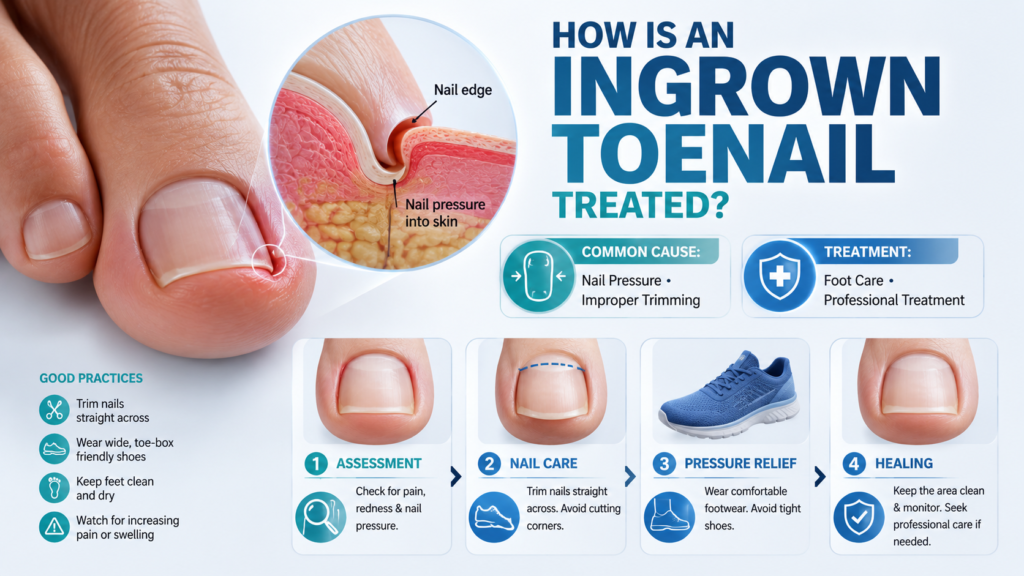
An ingrown toenail develops when the edge or corner of a nail presses into the surrounding skin. At first, it may cause only mild tenderness. As pressure continues, the skin can become red, swollen, painful, or infected.
Appropriate ingrown nail treatment depends on how deeply the nail is pressing into the skin, whether infection or abnormal tissue has developed, whether the problem keeps returning, and whether the patient has diabetes, neuropathy, or circulation problems.
For people with diabetes, an ingrown nail deserves additional attention. Reduced sensation may make a nail injury less painful than expected, while impaired circulation can affect healing. EDFC specifically treats nail and skin conditions as part of its wider diabetic-foot care program.
Patients looking for specialist diabetic-foot care in Surat can learn more about the approach at Elegance Diabetic Foot & Ulcer Clinic, where nail problems are assessed together with the overall health of the foot.
Key Takeaways
- An ingrown toenail occurs when a nail edge presses into surrounding skin.
- Early cases do not always require a procedure.
- Repeatedly cutting deeply into the nail corners can make the problem worse.
- Infection, swelling, discharge, or excessive tissue growth needs medical assessment.
- Recurrent cases may require treatment of the problematic nail edge.
- People with diabetes should be particularly cautious about treating an ingrown nail themselves.
- Nail shape, footwear pressure, and trimming technique can influence recurrence.
- Treatment should address the cause, not simply reduce temporary pain.
Why Does a Toenail Become Ingrown?
An ingrown nail usually develops when the side of the nail begins pressing into or penetrating the skin next to it.
The big toe is commonly affected.
Cutting nails too short or rounding deeply into the corners can encourage the nail edge to grow into surrounding tissue. Tight footwear can also compress the toe and increase pressure along the nail.
Some people naturally have more curved nails. Thickened, fungal, or deformed nails may also create additional pressure.
EDFC’s information on nail deformities and diabetic-foot pressure explains that altered nail shape can concentrate pressure on surrounding tissue and, in a diabetic foot, may contribute to skin breakdown.
What Does an Ingrown Toenail Feel Like?
Early symptoms may include tenderness where the nail meets the skin, mild redness, or discomfort when wearing shoes.
As the problem progresses, patients may notice more obvious swelling and increasing pain.
If infection develops, there may be worsening redness, warmth, discharge, or excessive sensitive tissue around the nail.
For someone with diabetic neuropathy, however, pain is not always a reliable warning sign.
A toe can be injured even when the patient feels surprisingly little discomfort. This is one reason visual foot inspection is important for people who have reduced sensation.
Can an Ingrown Toenail Be Treated Without Surgery?
Yes. Mild cases may sometimes be managed without removing part of the nail, particularly when there is no significant infection or recurrent deep nail penetration.
The first priority is reducing irritation and preventing additional pressure.
Footwear should provide adequate space around the toes. The nail should not be repeatedly dug out or aggressively cut at home.
For diabetic patients who have difficulty safely managing their nails, EDFC provides clinical nail and foot care through medical pedicure services. This service uses sterile instruments and includes nail trimming and assessment for early warning signs.
This is different from a cosmetic salon pedicure. In a diabetic foot, the objective is to protect the skin while identifying pressure or injury before it becomes a wound.
Why Should You Avoid Cutting Deep Into the Nail Corner?
When an ingrown nail becomes painful, a common reaction is to cut away the corner as deeply as possible.
This may temporarily reduce pressure, but it can also leave a sharp nail edge behind. As the nail grows forward again, the edge may penetrate the skin and restart the problem.
Using scissors, blades, or pointed instruments to dig beneath the nail can also accidentally break the skin.
For a person with diabetes, even a small cut deserves attention because reduced sensation may delay recognition of the injury.
A safer approach is to determine why the nail is repeatedly entering the skin.
When Does an Ingrown Nail Need a Procedure?
A nail procedure may be considered when an ingrown edge causes persistent pain, repeated inflammation, recurrent infection, or keeps returning despite appropriate conservative care.
Treatment does not necessarily mean removing the entire toenail.
In selected cases, only the problematic side of the nail may need treatment. When recurrence is a major issue, treatment may also address the growth area responsible for producing that particular nail edge.
The exact procedure should depend on the nail shape, surrounding tissue, circulation, infection, and whether the patient has additional diabetic-foot risks.
Patients can explore the range of foot and nail conditions managed at EDFC to understand why nail problems are assessed alongside wounds, circulation, deformity, and pressure.
What If the Nail Is Very Curved?
Not every painful curved nail is a typical ingrown toenail.
A pincer nail, for example, curves strongly inward from both sides and compresses the nail bed and surrounding tissue. EDFC notes that conservative reduction or nail bracing can help some cases, while recurrent painful cases may require more definitive correction.
This distinction matters because repeatedly trimming a severely curved nail may provide only temporary relief.
Correct diagnosis helps determine whether the main problem is trimming technique, footwear pressure, nail deformity, fungal thickening, or another cause.
Why Is Ingrown Nail Treatment Different for Someone With Diabetes?
The nail problem itself may look small, but the condition of the foot around it can change the treatment plan.
Diabetes can be associated with neuropathy and circulation problems. If protective sensation is reduced, a patient may not notice how much pressure or injury is developing around the nail.
A clinician may therefore look beyond the nail and check the surrounding skin, sensation, circulation, footwear pressure, infection, and any wound beneath or beside the nail.
This broader approach is part of the reason EDFC focuses specifically on diabetic-foot and ulcer care, rather than treating the nail only as a cosmetic problem.
What Happens After an Ingrown Nail Procedure?
Recovery depends on what treatment was required.
If only a small nail edge is treated, the recovery may be different from a more extensive procedure performed for a severely deformed or repeatedly infected nail.
Patients may receive instructions about keeping the area clean, changing dressings, footwear, activity, and follow-up.
For people with diabetes, monitoring the treated toe is particularly important.
Increasing redness, swelling, discharge, worsening pain, colour change, or failure of the area to heal should be reported rather than waiting for the next routine appointment.
Can an Ingrown Toenail Come Back?
Yes. Recurrence is possible.
If the underlying cause remains, the new nail edge may again create pressure.
Prevention therefore includes more than simply removing the painful portion once.
Appropriate nail trimming, enough room in footwear, management of thick or fungal nails, and professional nail care when self-trimming is unsafe can all help.
EDFC’s medical pedicure guidance specifically recommends cutting nails straight across rather than curving deeply into the corners, because curved cutting can encourage ingrowing nail edges.
When Should You Seek Treatment Quickly?
An ingrown nail should be assessed promptly if redness or swelling is spreading, pus or discharge develops, the skin opens, or the toe becomes significantly discoloured.
People with diabetes should have a lower threshold for seeking help, particularly if they have known neuropathy, poor circulation, previous ulcers, or previous diabetic-foot surgery.
A small nail injury is generally easier to manage before it develops into a deeper infection or wound.
Conclusion
Effective ingrown nail treatment should address both the painful nail edge and the reason it developed.
Mild cases may improve with pressure reduction, appropriate footwear, and safer nail care. Recurrent or more advanced cases may require professional reduction or a procedure involving the problematic nail edge.
For people with diabetes, aggressive home cutting can turn a relatively small nail problem into a skin injury. Professional assessment becomes especially important when sensation or circulation is reduced.
If you are looking for ingrown nail or diabetic-foot treatment in Surat, early evaluation can help determine whether the problem needs routine clinical nail care or a more definitive procedure.
Foot Care Designed Around Diabetic Risk
At Elegance Diabetic Foot & Ulcer Clinic, nail problems are considered within the condition of the entire foot. The clinic’s published approach includes preventive foot care, nail management, wound treatment, pressure assessment, and surgical care when necessary.
Dr. Ashutosh Shah has more than 22 years of surgical experience and leads EDFC’s diabetic-foot care. Patients who want to understand the clinical approach and available care can learn more about EDFC and Dr. Shah’s diabetic-foot work before choosing treatment.
Don’t Wait for a Nail Problem to Become a Wound
If an ingrown nail in a diabetic foot is repeatedly swollen, painful, or difficult to trim safely, it may be better to have the pressure assessed before trying to remove the corner again yourself. Patients in Surat can reach the EDFC foot-care team for an assessment and determine whether clinical nail care or a procedure is appropriate.
Frequently Asked Questions
Mild cases may sometimes settle with appropriate nail care and pressure reduction. Recurrent or advanced cases may need a procedure.
Avoid digging deeply into the corner, particularly if you have diabetes or reduced foot sensation.
No. Depending on the problem, treatment may involve only the affected nail edge.
Yes. Neuropathy can reduce warning pain, while circulation problems can affect healing.
Footwear that compresses the toes can increase pressure around the nail and contribute to symptoms.
Nail shape, trimming technique, footwear pressure, or an underlying nail deformity may continue pushing the edge into the skin.