
Can Wound Debridement Help Avoid Amputation? What Changes the Outcome
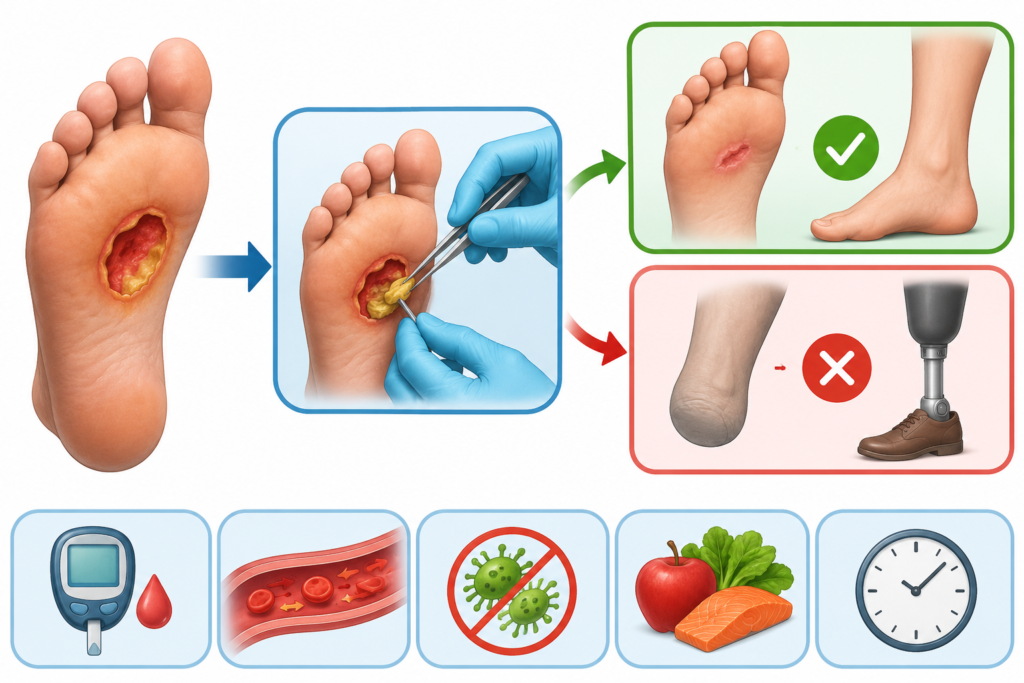
Early wound debridement to avoid amputation may help when infection is controlled, blood flow is assessed and pressure is removed from the wound. Delayed treatment, uncontrolled blood sugar and smoking increase complications. The earlier a specialist examines the wound, the more treatment options may remain available.
Diabetic foot wounds can become serious even when they cause little or no pain. Removing unhealthy tissue at the appropriate time may help protect surrounding structures and support healing.
However, debridement alone cannot guarantee that amputation will be avoided. Successful treatment requires a comprehensive approach based on the patient’s condition.
Why does amputation risk rise with delay?
Diabetes can damage nerves and affect blood circulation. Reduced sensation may prevent patients from noticing injuries, while poor circulation can interfere with wound healing.
When an untreated wound becomes infected, bacteria may spread into deeper tissues, muscles or bones. Extensive tissue damage can make limb preservation more difficult.
Wound debridement to avoid amputation focuses on removing unhealthy tissue when clinically appropriate and creating better conditions for wound recovery.
Early assessment by Dr. Ashutosh Shah can help identify the severity of the wound and determine whether debridement, infection management or vascular treatment is necessary.
Factors that increase amputation risk
| Factor | Raises risk | What helps |
|---|---|---|
| Infection | Delayed diagnosis and treatment | Prompt medical assessment |
| Poor circulation | Reduced oxygen supply | Vascular assessment and treatment |
| High blood sugar | Impaired wound healing | Individualised diabetes management |
| Smoking | Blood vessel damage | Smoking cessation |
| Wound pressure | Continued walking on ulcers | Prescribed offloading |
| Missed follow-ups | Unnoticed wound deterioration | Regular specialist reviews |
| Delayed treatment | Progressive tissue damage | Early intervention |
A painless wound should never be considered harmless. New ulcers, discharge, swelling or skin discolouration require prompt medical attention.
Which tests check blood flow?
Adequate blood circulation is essential for wound healing. Without sufficient oxygen and nutrients, damaged tissue may struggle to recover even after debridement.
The specialist may recommend circulation assessments before deciding on the treatment approach.
Common assessments include:
- Foot pulse examination: Checks blood flow through accessible arteries.
- Ankle-brachial index (ABI): Compares blood pressure measurements at the ankle and arm.
- Toe-brachial index (TBI): Helps assess circulation in the toes, particularly when ankle measurements are unreliable.
- Arterial Doppler ultrasound: Evaluates blood flow and possible arterial narrowing.
- Transcutaneous oxygen measurement: May help assess oxygen availability in surrounding tissues.
Not every patient requires all these investigations. Test selection depends on clinical findings and wound severity.
Patients considering wound debridement to avoid amputation may require vascular treatment if circulation is significantly impaired.
In selected cases, restoring blood flow before or alongside wound treatment may improve the possibility of healing.
How is infection controlled during wound debridement in Varachha Surat?
Infection management is an important part of diabetic foot treatment. The specialist first determines whether infection is present and how deeply it has spread.
Treatment may include wound cleaning, appropriate debridement, antibiotics and drainage of infected collections when necessary.
Removing unhealthy tissue
Debridement removes selected dead or damaged tissue. This may help reduce the burden of unhealthy tissue and allow better assessment of the wound.
Different techniques may be appropriate depending on infection, circulation and tissue condition.
Patients can explore related surgical treatment information through debridement surgery in ankleshwar.
Managing bacterial infection
Antibiotics may be prescribed when clinical infection is present. Tissue samples may help identify bacteria and guide antibiotic selection.
Antibiotics are not routinely recommended for clinically uninfected diabetic foot ulcers.
Protecting the wound
Appropriate dressings help protect the wound and manage discharge. Offloading reduces mechanical pressure that could damage healing tissue.
Learn more about wound debridement healing and the factors influencing recovery.
What can families do at home?
Family support plays an important role in diabetic foot recovery. Patients with reduced sensation, limited mobility or poor eyesight may struggle to examine their feet independently.
Home care should complement professional treatment rather than replace it.
Families supporting wound debridement to avoid amputation should follow these precautions:
- Inspect both feet daily for new injuries or skin changes.
- Keep dressings clean and dry according to medical instructions.
- Help the patient monitor blood sugar.
- Encourage the use of prescribed offloading devices.
- Avoid unnecessary walking on an active ulcer.
- Support balanced nutrition and smoking cessation.
- Ensure follow-up appointments are not missed.
Never attempt to cut away dead tissue, remove calluses or drain an infected wound at home.
Warning signs that require urgent care
Contact a medical professional promptly if the wound develops increasing redness, swelling, warmth, discharge or an unpleasant smell.
Blackening of the foot, rapidly spreading infection, fever with severe illness or confusion requires immediate emergency assessment.
Do not wait for the next scheduled appointment when serious warning signs appear.
When is surgery the safer choice?
Some diabetic foot wounds require surgical intervention to control infection, remove extensively damaged tissue or protect surrounding structures.
Surgery may be considered when there is a deep abscess, extensive tissue death, severe infection or selected cases of bone infection.
The decision depends on circulation, infection severity, tissue viability and the patient’s overall health.
In suitable patients, reconstructive procedures may help cover selected wounds after infection control and adequate circulation have been established. Read more about flap surgery for foot wound in bardoli.
Although wound debridement to avoid amputation may support limb preservation, amputation can sometimes be necessary to control life-threatening infection or remove irreversibly damaged tissue.
The priority is protecting the patient’s health and preserving as much functional tissue as safely possible.
Frequently Asked Questions
No. Some mild diabetic foot infections may respond to appropriate antibiotics, wound care and pressure relief. However, deep abscesses, extensive dead tissue or severe infections may require surgery. The specialist evaluates wound depth, circulation and infection severity before recommending the most appropriate treatment.
A black toe may indicate severely reduced circulation or tissue death and requires immediate medical assessment. Patients seeking wound debridement in Varachha Surat should not delay emergency evaluation. Whether the toe can be preserved depends on tissue viability, blood supply and the extent of infection.
Smoking damages blood vessels and reduces the oxygen available to healing tissues. In patients with diabetes, this can worsen circulation problems and delay wound recovery. Stopping smoking is an important part of reducing complications and supporting the effectiveness of professional diabetic foot treatment.
A second opinion may help patients understand available limb-preservation options when their condition is stable. A specialist can review circulation, infection severity and tissue damage. However, seeking another opinion should never delay urgent surgery when a serious infection or other life-threatening complication is present.
After minor foot surgery, patients may require regular dressings, prescribed medicines, pressure relief and follow-up assessments. Recovery depends on circulation, infection control and wound severity. The specialist provides individual instructions regarding walking, footwear and returning to daily activities based on the patient’s healing progress.
Conclusion
Timely wound assessment, appropriate debridement, infection management and improved circulation may reduce the risk of serious diabetic foot complications.
For individual assessment and treatment guidance from Dr. Ashutosh Shah, visit the contact us page.