VAC Therapy for Wound in Ankleshwar: Procedure, Benefits and Recovery
VAC therapy for wound in Ankleshwar is a wound care option for selected patients with deep, slow-healing or complex wounds. Also called negative pressure wound therapy (NPWT), it uses controlled suction through a sealed dressing to remove excess wound fluid and support healing. However, patients need a specialist assessment to determine whether this treatment suits their wound.
People with diabetes may develop foot wounds that heal slowly because of poor blood circulation, nerve damage, infection or repeated pressure. Therefore, proper wound care is important to reduce complications.
Dr. Ashutosh Shah can assess the wound and discuss whether VAC therapy, standard dressings or another treatment approach is appropriate.
What Is VAC Therapy (Negative Pressure Wound Therapy)?
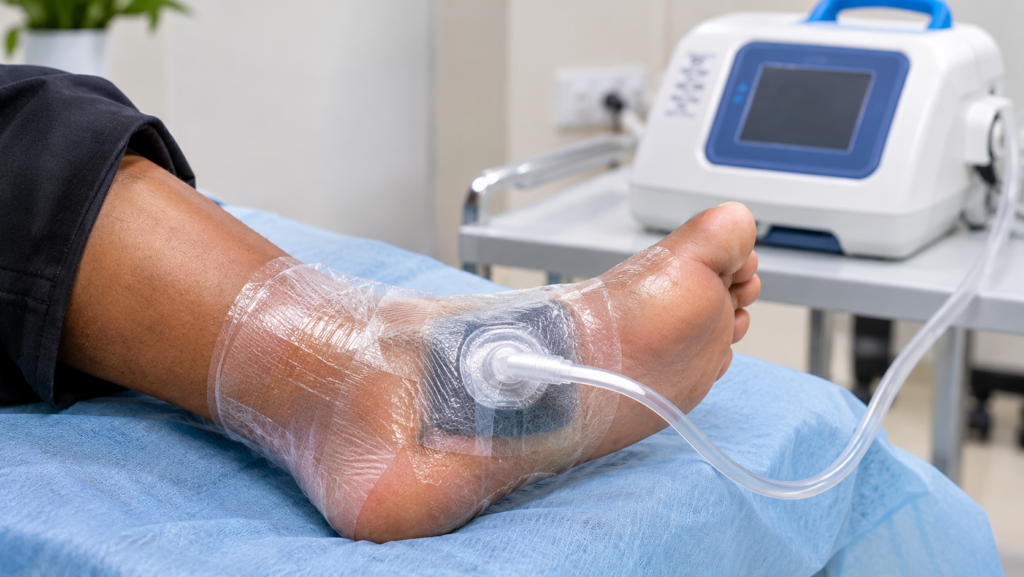
VAC therapy is a wound treatment method that uses a special dressing connected to a suction device.
The device creates controlled negative pressure over the wound. As a result, it helps remove excess fluid and supports the formation of healthy granulation tissue.
Doctors may use this treatment for selected complex wounds, including some diabetic foot wounds and certain surgical wounds.
However, VAC therapy does not replace infection treatment, adequate blood flow or pressure relief.
How Does VAC Therapy Work?
The treatment uses three main parts:
- Wound dressing: A suitable foam or gauze dressing covers the wound.
- Sealed film: A protective adhesive film creates an airtight seal.
- Suction device: A tube connects the dressing to a pump that applies controlled negative pressure.
The system collects wound fluid in a container or compatible collection system.
Consequently, the dressing can help manage wound fluid while supporting the healing environment.
Who May Benefit From VAC Therapy?
Doctors may recommend VAC therapy when a wound needs more support than standard dressings alone.
Patients who may benefit include those with:
- Selected diabetic foot ulcers
- Deep or complex wounds
- Some wounds after surgical cleaning
- Wounds with significant fluid discharge
- Selected surgical wounds that are difficult to close
- Certain wounds that need support before further reconstruction
However, the doctor must first check the wound’s condition.
When Is VAC Therapy Not Suitable?
VAC therapy is not appropriate for every wound.
For example, clinicians generally avoid placing negative pressure dressings directly over untreated dead tissue, exposed major blood vessels or certain other high-risk structures without suitable protection.
Active bleeding, untreated infection involving bone, or poor circulation may also require additional assessment and treatment before VAC therapy.
Therefore, patients should never start or adjust VAC treatment without professional guidance.
How Is VAC Therapy Done Step by Step?
The VAC therapy procedure follows a planned approach.
Step 1: Wound Examination
First, the specialist examines the wound.
They check its size, depth, discharge and surrounding skin.
They also assess circulation and look for infection.
Step 2: Wound Cleaning
Next, the wound care team cleans the affected area.
If dead tissue is present, the doctor may recommend debridement before starting therapy.
This step helps prepare the wound for suitable treatment.
Step 3: Dressing Placement
The clinician places the recommended foam or gauze dressing inside or over the wound.
They then cover it with a special adhesive film.
The film helps maintain an airtight seal.
Step 4: Applying Negative Pressure
A tube connects the dressing to the suction device.
The clinician selects the pressure settings according to the wound and treatment plan.
The device then applies controlled suction.
Patients should not change the pressure settings themselves.
Step 5: Follow-Up and Dressing Changes
The wound care team checks the dressing and monitors healing.
They also look for pain, bleeding, infection or problems with the device.
VAC dressing change frequency: [Dr. Ashutosh Shah to confirm the clinic’s usual schedule.]
What Happens During a VAC Dressing Change?
Dressing changes are an important part of VAC therapy.
During the visit, the wound care team removes the old dressing and checks the wound.
They assess:
- Wound size and depth
- Amount of discharge
- Healthy tissue formation
- Surrounding skin condition
- Signs of infection
- Patient comfort
Next, they clean the wound and apply a new dressing when appropriate.
Some patients feel discomfort during dressing removal. Therefore, the doctor may recommend suitable pain management.
The dressing change schedule depends on wound condition and clinical needs.
Benefits and Limitations of VAC Therapy
VAC therapy can offer several benefits in properly selected wounds.
Potential Benefits
1. Helps remove excess wound fluid
Controlled suction removes fluid from the wound area.
2. Supports healthy tissue formation
The treatment can help promote granulation tissue in suitable wounds.
3. Helps manage complex wounds
Doctors may use NPWT as part of a broader treatment plan for selected difficult wounds.
4. Supports wound preparation
In some cases, the treatment helps prepare a wound for further closure or reconstruction.
Important Limitations
VAC therapy does not guarantee faster healing for every wound.
Also, it cannot correct poor circulation or replace antibiotics when a bacterial infection requires treatment.
Some patients may experience pain, bleeding, skin irritation or dressing leaks.
Therefore, the doctor must monitor progress and review whether continued therapy remains appropriate.
How Long Does Wound Healing Take?
Healing time depends on several factors.
These include wound size, depth, infection, blood flow, blood sugar control and pressure on the affected area.
A small wound may heal differently from a deep diabetic foot ulcer.
During the First Few Days
The doctor checks whether the dressing works correctly and whether the wound shows any problems.
Patients should report increasing pain, bleeding, fever or device alarms.
During the Following Weeks
The wound care team monitors changes in wound size and healthy tissue formation.
If the wound improves, the doctor may continue or adjust the treatment.
However, if progress remains poor, the specialist may reassess circulation, infection or other causes of delayed healing.
Expected treatment duration: [Dr. Ashutosh Shah to confirm.]
VAC Therapy Recovery and Warning Signs
| Stage | What to Expect | What to Do | Warning Signs |
|---|---|---|---|
| Initial assessment | Wound suitability checked | Complete recommended tests | Severe infection or bleeding |
| First dressing | Negative pressure system started | Follow device instructions | Increasing pain |
| Early follow-up | Dressing and wound reviewed | Attend dressing appointments | Fever or dressing leaks |
| Ongoing treatment | Healthy tissue may develop | Protect wound from pressure | Worsening wound condition |
| Later review | Further treatment planned | Follow specialist advice | No improvement or new tissue damage |
VAC Therapy Cost and Follow-Up Care
The cost of VAC therapy depends on the wound and treatment plan.
Several factors influence the total expense.
1. Wound Size and Depth
Large or deep wounds may require more dressing materials and longer treatment.
2. VAC Device and Consumables
The device type, dressing materials, tubing and collection system can affect costs.
3. Number of Dressing Changes
Some wounds need repeated dressing changes over several weeks.
Therefore, follow-up visits contribute to the total expense.
4. Additional Wound Care
Patients may need wound cleaning, infection treatment or other procedures.
5. Duration of Therapy
Longer treatment can increase device and dressing expenses.
Estimated VAC therapy cost: [Clinic to confirm approved range.]
Dressing charges: [Clinic to confirm.]
Device-related charges: [Clinic to confirm.]
Patients should request an itemised estimate before treatment when medically appropriate.
VAC Therapy and Nonsurgical Wound Management
VAC therapy forms one part of wound management. However, not every wound needs a suction device.
Some wounds improve with standard dressings, infection control, pressure relief and proper diabetes management.
Other patients may require additional procedures.
Therefore, the doctor should select treatment based on the wound’s condition rather than choosing one method for every patient.
Patients can also discuss options covered under Nonsurgical Management, including wound dressings, pressure relief and ongoing monitoring.
When Should You Consult a Wound Care Specialist?
Patients should seek medical advice if a foot wound does not improve, becomes deeper or develops signs of infection.
Important warning signs include:
- Increasing redness or swelling
- Pus or unusual discharge
- Fever
- Blackened skin
- New or worsening pain
- Unpleasant wound odour
- Bleeding
- Rapid changes in wound appearance
People with diabetes should not wait for pain before seeking help because nerve damage may reduce sensation.
A rapidly spreading infection, significant bleeding or systemic illness requires urgent medical assessment.
Frequently Asked Questions
Some patients feel discomfort when the clinician applies or removes the dressing. However, the level of pain varies with wound size, location and sensitivity. The doctor may recommend pain relief before dressing changes. Patients should report severe or increasing pain because it may indicate a treatment-related problem.
The duration depends on wound size, depth, blood flow and response to treatment. Some patients need a shorter course, while complex wounds may require longer care. The specialist checks progress during follow-up visits and decides when to stop or change treatment.
VAC therapy may help selected diabetic foot wounds, especially some complex wounds after surgery. However, it does not suit every diabetic ulcer. The doctor must assess infection, circulation and pressure on the foot before recommending treatment. Good diabetes management and appropriate wound care remain important throughout recovery.
No. VAC therapy is not suitable for every wound. Some wounds need infection control, removal of dead tissue or improved circulation before treatment. Other wounds may heal with standard dressings. Therefore, a specialist should examine the wound and discuss the benefits, risks and alternatives before starting therapy.
The dressing change schedule depends on wound condition, infection risk and the type of negative pressure system. A trained clinician should manage dressing changes according to the treatment plan. Patients should contact the care team if the dressing leaks, the device alarms or they notice increasing pain or bleeding.
Consultation With Dr. Ashutosh Shah
Patients considering vac therapy for wound in ankleshwar should arrange a specialist wound assessment before choosing treatment.
Dr. Ashutosh Shah can evaluate the wound, discuss whether negative pressure wound therapy is suitable and explain other available wound care options.
The treatment plan may include wound cleaning, infection management, pressure relief and follow-up care.
Patients should also ask about dressing schedules, device care and possible expenses.
Conclusion
VAC therapy uses controlled negative pressure to help manage wound fluid and support healing in selected wounds.
However, successful wound care also depends on infection control, adequate blood circulation, diabetes management and pressure relief.
Patients should seek specialist advice before starting treatment and attend all recommended follow-up visits.
Early assessment can help identify the most appropriate wound care approach and reduce the risk of complications.