
Is a Small Foot Wound Dangerous in Diabetes? Know How it can be Treated in Vizianagaram
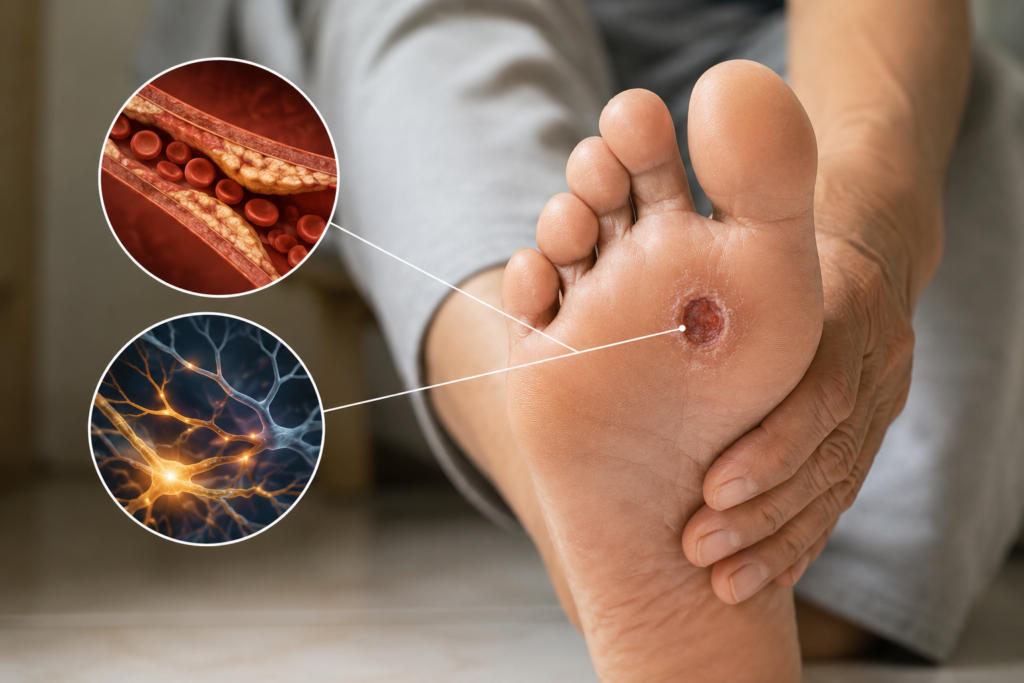
Yes- a small foot wound can be dangerous in diabetes. Nerve damage (neuropathy) hides pain while poor circulation slows healing, so a minor cut, blister, or crack can quickly become an infected ulcer. Treated early, most heal well; ignored, they risk serious infection or amputation. See a doctor within 24 hours.
A scratch you would shrug off without diabetes is not the same wound on a diabetic foot. This guide explains why tiny wounds turn serious, the warning signs to watch for, how they are treated, and exactly when to get help, so a small problem stays small.
Is a small foot wound dangerous if you have diabetes?
Yes. In diabetes, even a pinhead blister, cracked heel, or shallow cut deserves attention because the body’s normal alarm system and repair system are both weakened. The wound itself may look trivial, but the conditions around it, numbness, reduced blood flow, and higher infection risk, are what make it dangerous.
The reassuring part: danger is mostly about delay, not the wound’s size. Caught in the first day or two and offloaded, cleaned, and dressed properly, the large majority of small diabetic foot wounds heal without drama.
Why does a tiny wound turn serious in diabetes?
Three problems stack on top of each other. Together they let a minor wound progress silently from skin break to deep infection.
- Neuropathy (nerve damage): high blood sugar damages foot nerves, so you may not feel the cut, the rubbing shoe, or the heat of an infection. Pain-your natural warning-goes missing.
- Peripheral artery disease (PAD): narrowed leg arteries reduce blood flow, and blood carries the oxygen, white cells, and antibiotics a wound needs to heal. Less flow means slower healing.
- Weakened immune defence: high glucose blunts the immune response, so bacteria multiply faster and infection spreads deeper, sometimes reaching tendon or bone.
Clinical guidelines highlight that in a diabetic foot the usual signs of inflammation can be masked by neuropathy and poor circulation-so a wound can be infected while looking and feeling deceptively mild. A non-healing ulcer is often the visible end of this hidden chain.
What does a dangerous diabetic foot wound look like?
Warning signs are about the skin around the wound and how it behaves over days. Check your feet daily and act if you notice any of the following:
- Redness, warmth, or swelling spreading around the wound
- Pus, cloudy fluid, or a bad smell
- The wound getting larger, deeper, or darker (black or grey tissue)
- A wound that has not improved in about a week
- A callus, blister, or crack with a sore underneath
- Fever, chills, or feeling generally unwell
- New numbness, burning, or a patch that feels cooler than the rest of the foot
An area that stays red after you remove your shoe and sock, or one spot noticeably warmer than the surrounding skin, points to pressure damage or early infection and should not wait.
How fast can a diabetic foot wound get worse?
Faster than most people expect-an infection can deepen within days. Because pain is dulled by neuropathy, the wound often advances without the discomfort that would normally send you to a doctor, so the first obvious clue may be spreading redness, swelling, or drainage.
When infection meets poor circulation, the risk of poor healing and tissue loss rises sharply, which is why specialists treat a changing diabetic foot wound as urgent rather than routine. Hours and days matter here.
Small wound or diabetic foot ulcer- what’s the difference?
A wound is any break in the skin. An ulcer is an open sore that has failed to heal and often extends into deeper tissue. The table below shows when a small wound is likely healing normally versus when it is behaving like a developing ulcer that needs a clinic.
| Sign | Likely healing normally | Warning – see a doctor |
|---|---|---|
| Size over time | Getting smaller each day | Same size or growing after a week |
| Surrounding skin | Normal colour and temperature | Spreading redness, warmth, or swelling |
| Drainage | Little to none, clear | Pus, cloudy fluid, or odour |
| Depth | Shallow, surface only | Deep, you can see fat/tendon, or black tissue |
| How you feel | Well | Fever, chills, high blood sugar that won’t settle |
How is a diabetic foot wound treated?
Treatment matches the wound. Most small wounds are managed without surgery, while deeper or infected ones may need a procedure to clear dead tissue and protect the foot. Care usually combines several steps.
- Assessment: checking sensation, circulation, and infection, often with simple non-invasive foot investigations like a vascular Doppler.
- Cleaning and dressing: removing dead tissue and applying specialized ulcer dressings to keep the wound clean and moist.
- Offloading: taking pressure off the wound with the right footwear or devices so it can heal.
- Infection control: antibiotics guided by a wound culture when infection is present.
- Blood-flow and sugar control: improving circulation and stabilising glucose so the wound has what it needs to close.
- Surgery when needed: for deep or spreading wounds, debridement and corrective surgery remove infected tissue and help preserve the limb.
Spreading soft-tissue infections such as cellulitis or gangrene are emergencies and need same-day care.
How can you prevent foot wounds with diabetes?
Prevention is the single most effective protection, and most serious problems are avoidable with daily habits. Build this short routine into your day:
- Inspect both feet daily—tops, soles, heels, and between the toes, using a mirror or a family member’s help.
- Wash with lukewarm (not hot) water, dry gently, and moisturise dry skin (avoid between the toes).
- Never walk barefoot, indoors or out; check inside shoes for stones or rough seams before wearing.
- Wear well-fitting, protective diabetic footwear; treat corns and calluses professionally, not with blades at home.
- Keep blood sugar in your target range and don’t smoke.
- Have your feet examined at a clinic at least once a year, more often if you have neuropathy or a past ulcer.
- Follow safe daily foot-care steps for any small wound while you arrange a check-up.
When should you see a doctor for a diabetic foot wound?
See a doctor within 24 hours of finding any new foot wound if you have diabetes, even a small one. Don’t wait to see whether it heals on its own, because neuropathy can hide how serious it is. Seek same-day or emergency care for these red flags:
- Spreading redness, swelling, warmth, pus, or a foul smell
- Black, grey, or dead-looking tissue
- Fever, chills, or feeling unwell
- A deep wound, or one exposing fat, tendon, or bone
- Blood sugar that suddenly becomes hard to control
For urgent foot concerns you can call our team on +91 88490 66499.
Diabetic foot wound care at Elegance (Vizianagaram)
In our Vizianagaram clinic we routinely meet patients who waited weeks because a coin-sized sole wound felt painless, by then it had quietly tunnelled into deeper tissue. Early assessment usually changes that story completely. Elegance Diabetic Foot & Ulcer Clinic, part of the network founded by plastic and reconstructive surgeon Dr. Ashutosh Shah, offers both non-surgical and surgical care focused on infection control, faster wound healing, and limb preservation. If you’ve found a new foot wound, book an appointment or visit one of our OPD centres.
Frequently Asked Questions
Sometimes, but you shouldn’t gamble on it. In diabetes, neuropathy and poor circulation make even small wounds heal slowly and hide infection. The safest approach is to clean and protect the wound, then have it checked within 24 hours so problems are caught while still minor.
It varies widely. A small, well-managed wound with good blood flow may heal in a few weeks, while deeper or poorly circulated wounds can take months. Healing speed depends on blood sugar control, circulation, offloading pressure, and keeping the wound free of infection.
An untreated wound can become an infected ulcer that spreads to deeper tissue, tendon, or bone. Combined with poor circulation, this raises the risk of serious infection, tissue death (gangrene), and amputation. Most of these outcomes are preventable with early treatment, which is why delay is the real danger.
Basic first aid—gentle cleaning, a clean dressing, and offloading pressure—is fine as a first step. But home care is not a substitute for a professional check, and you should never cut corns or dead tissue yourself. Always have a diabetic foot wound assessed promptly by a clinician.
Watch for spreading redness, warmth, swelling, pus or cloudy drainage, a bad smell, or the wound enlarging. Fever or blood sugar that suddenly won’t settle are also clues. Because neuropathy can mask pain, don’t rely on how it feels—get it examined the same day.
No—this is a dangerous myth. In diabetes, nerve damage often removes pain, so a serious, infected wound can feel like nothing at all. A painless wound should be treated with the same urgency as a painful one, and assessed by a doctor without delay.
Talk to a diabetic foot specialist
If you’ve spotted a small foot wound, don’t wait for it to heal on its own. Book an appointment with our team today, early care is the simplest way to keep a small wound small.
Medical disclaimer: This article is for education only and is not a substitute for professional diagnosis or treatment. If you have diabetes and a foot wound, consult Dr. Sravani Muddada or a qualified diabetic foot specialist promptly.
Authoritative sources: American Diabetes Association – Foot Complications · International Working Group on the Diabetic Foot (IWGDF) Guidelines.