
Can Plantar Exostectomy Help Prevent Diabetic Foot Ulcers?
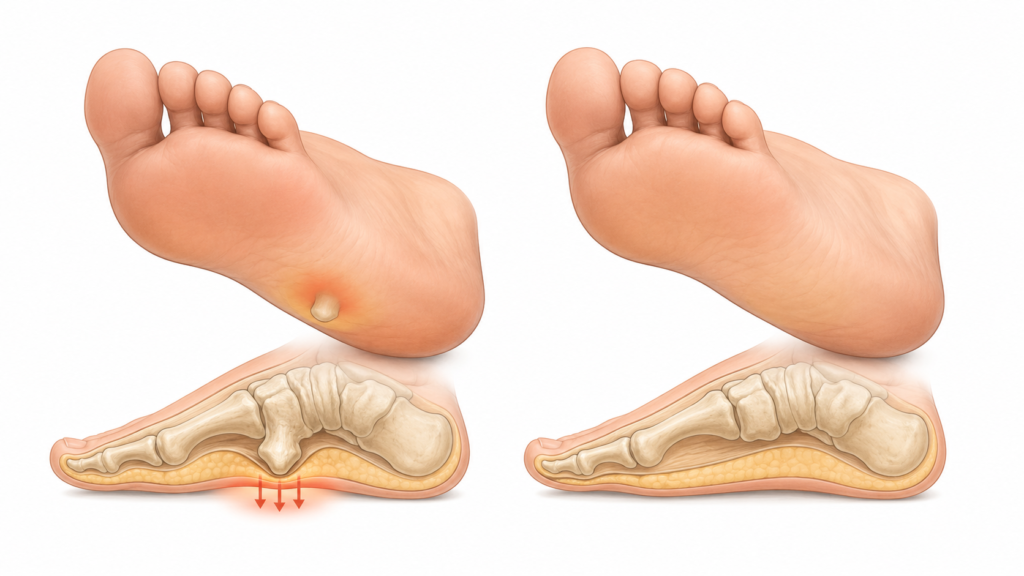
Yes, plantar exostectomy may help reduce the risk of diabetic foot ulcers in selected patients, especially when a prominent bone underneath the foot creates repeated pressure on the skin.
However, plantar exostectomy does not prevent every diabetic foot ulcer. Doctors usually consider it when a specific bony prominence causes excessive pressure, recurrent wounds, or difficulty with pressure relief.
How Can a Bone Prominence Cause an Ulcer?
People with diabetes may develop reduced sensation in the feet, also called diabetic neuropathy. Because of this, they may not notice pressure, friction, or minor injuries.
A bony prominence on the bottom of the foot can create repeated pressure while standing or walking. Over time, this pressure can cause:
Pressure → Skin breakdown → Wound → Diabetic foot ulcer
If the pressure continues, the wound may repeatedly return even after it heals.
What Is Plantar Exostectomy?
Plantar exostectomy is a surgical procedure that removes a prominent area of bone from the foot.
The main goal is to reduce excessive pressure at the affected area. By removing the problematic bone prominence, the doctor may create a more balanced pressure distribution and reduce the chance of recurrent ulceration in carefully selected patients.
When Might It Help Prevent an Ulcer?
A doctor may consider plantar exostectomy when a diabetic patient has:
- A prominent bone causing excessive plantar pressure
- A recurrent ulcer at the same location
- A foot deformity creating pressure points
- Difficulty healing because of repeated mechanical pressure
- A healed ulcer that continues to recur despite conservative treatment
The decision depends on the patient’s circulation, nerve function, bone structure, infection status, and overall foot condition.
Is Surgery Always Necessary?
No. Doctors usually consider nonsurgical methods first when appropriate.
These may include:
- Custom diabetic footwear
- Insoles or orthotics
- Pressure offloading
- Activity modification
- Regular foot examinations
- Wound care
- Blood sugar management
If these measures do not adequately control pressure or the ulcer keeps returning because of a structural bone prominence, surgery may become an option.
What Happens After Plantar Exostectomy?
After surgery, protecting the treated area remains important. Your doctor may recommend specific footwear, limited weight-bearing, wound care, and regular follow-up.
The recovery plan depends on the location of the bone removal and the patient’s overall health.
Why Is Early Treatment Important?
A diabetic foot ulcer can become serious if infection develops or blood circulation is poor. Early evaluation can help identify pressure points before they progress to deeper tissue damage.
Patients with diabetes should regularly check their feet for:
- Blisters
- Cuts
- Redness
- Swelling
- Calluses
- Skin breakdown
- Changes in skin color
- New areas of pain or pressure
Plantar Exostectomy at Elegance Diabetic Foot And Ulcers Clinic
At Elegance Diabetic Foot And Ulcers Clinic, doctors can evaluate diabetic foot problems, pressure points, ulcers, and underlying structural concerns to develop an appropriate treatment plan.
Dr. Ashutosh Shah, with over 22 years of experience in plastic, reconstructive, and diabetic foot care, can assess the patient’s foot condition and determine whether conservative treatment, pressure offloading, wound care, or a surgical procedure such as plantar exostectomy may be appropriate.
Bottom Line
Plantar exostectomy may help prevent recurrent diabetic foot ulcers when a prominent bone creates excessive pressure under the foot. However, it is not a universal treatment for diabetic foot ulcers.
The best approach combines pressure management, proper footwear, foot care, wound management, circulation assessment, and regular medical follow-up. A specialist should evaluate the underlying cause before recommending surgery.
FAQs
Plantar exostectomy may help reduce the risk of recurrent diabetic foot ulcers when a prominent bone creates excessive pressure under the foot. It is not suitable for every patient.
Not always. An active ulcer may first require wound care, infection treatment, pressure offloading, and circulation assessment. Surgery may be considered when an underlying bone prominence contributes to recurrent ulceration.
The procedure can be appropriate for selected diabetic patients, but risks depend on circulation, blood sugar control, infection, nerve function, and overall health. A specialist should assess these factors before surgery.
Yes. Diabetic neuropathy can reduce sensation in the feet, making it harder to notice pressure, blisters, cuts, or other injuries that may eventually develop into ulcers.
Recovery varies according to the surgical site, bone removal, wound condition, and overall health. Your doctor will provide specific instructions about weight-bearing, footwear, wound care, and follow-up.